About

Vision

The Avionics School aims to advance engineering practices in the defence industry to a globally competitive level by placing full compliance with aviation standards and the integration of design and certification processes at the centre of its approach. The program establishes a comprehensive educational ecosystem that encompasses all relevant disciplines, including analog design, software development, mechanical analysis, and system safety. It aims to ensure the sustainable development of complex avionics systems through national and indigenous capabilities. The program also seeks to equip hardware, software, and systems engineers to contribute to the development of future air platforms by integrating theoretical knowledge with practical field experience, fostering a shared design language and a common professional vision.

Methodology & Infrastructure

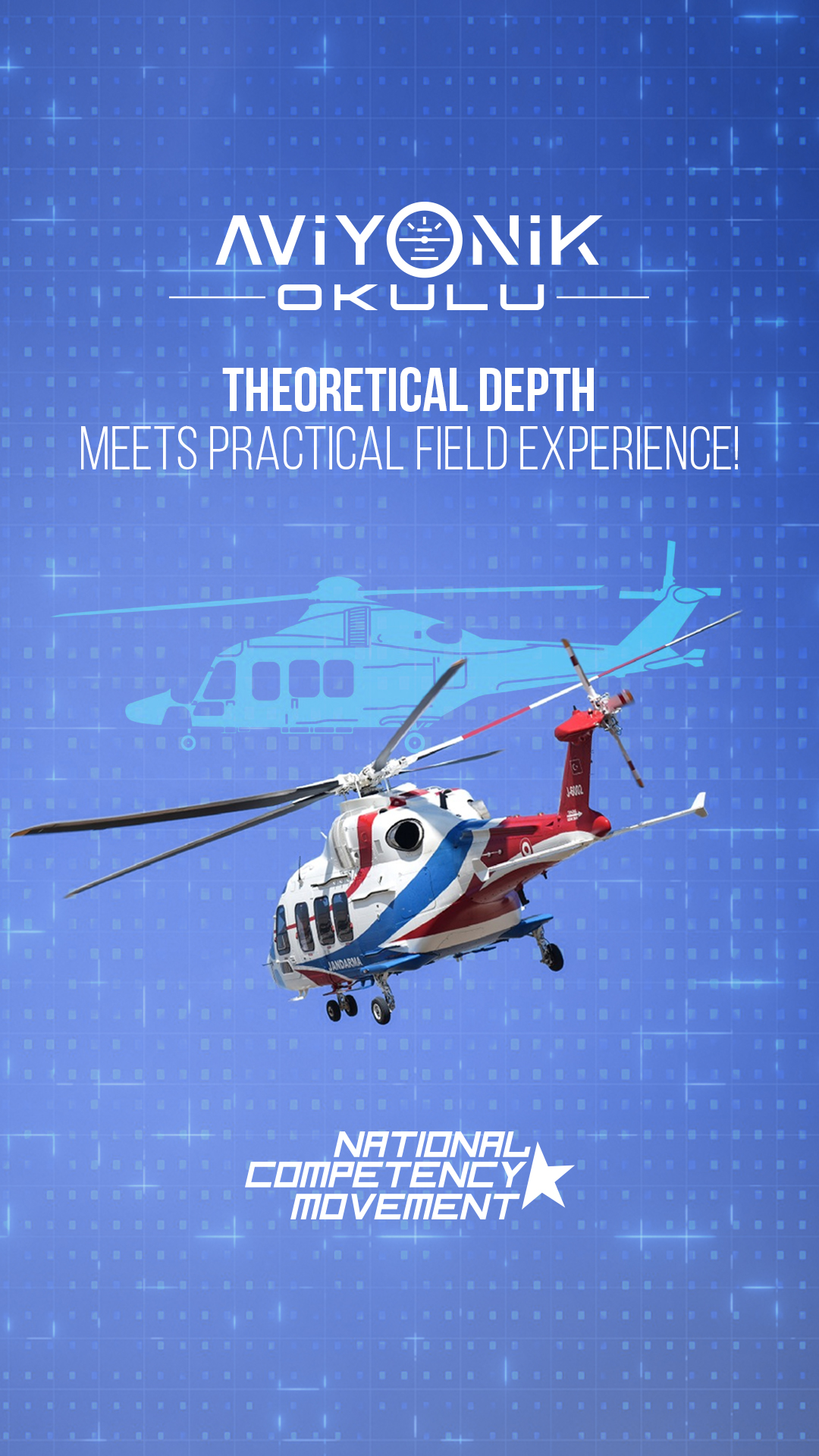
The educational infrastructure integrates theoretical knowledge with practical field experience and is supported by application-oriented content, engineering scenarios, and insights derived from real-world system development processes. This approach is implemented to enable participants to develop competencies in the design and development of sustainable, high-quality avionics systems that comply with global aviation standards. The training is managed in alignment with established quality standards and is continuously refined through systematic evaluation and ongoing improvement processes.

Target Audience

The Avionics School is designed for engineers and technical specialists involved in the design, development, and verification processes of avionics systems. The program particularly targets avionics design engineers, avionics software design engineers, avionics systems design engineers, software design engineers, mechanical design engineers, digital design engineers, hardware designers, and experts in specialised engineering design.

Program Design and Courses

The training programs are designed and delivered with the support of industry professionals. Within this framework, the Expert Advisory Board established for the Avionics School defines the program's strategic vision and provides periodic guidance on developing and updating the training content.

Expert Advisory Board

The "Expert Advisory Board (EAB)" within the Avionics School provides recommendations and guidance on the following topics:

  • Assess the program’s content, quality, and technical adequacy to ensure alignment with institutional goals and industry standards.
  • Develop new training modules to meet evolving needs and incorporate technological advancements.
  • Revise and update existing training modules to maintain their relevance and effectiveness.
Training Coordinators

The "Coordinators" within the Avionics School operate in line with the needs of the defence industry and are responsible for:

  • Conducting training needs analysis
  • Developing the content of training modules
  • Preparing training catalogues
  • Customising training content based on demand and need
  • Implementing the feedback and recommendations of the Expert Advisory Board (EAB)

Requests

New Training Request

You can create a preliminary request for an existing course by selecting it from the "Courses" list and filling in the relevant sections under the "Request" tab.

Training Request

You can create a preliminary request for an existing course by selecting it from the "Courses" list and filling in the relevant sections under the "Request" tab.

Customized New Training Request

If the course you need is not in the existing list or requires customization, you can submit the course content, location, and preferred instructor (if any) here.

Customized New Training Request

If the course you need is not in the existing list or requires customization, you can submit the course content, location, and preferred instructor (if any) here.

Team

Courses

AVTS01 – Special Topics of Analog Electronic Design for Avionics Applications
Duration: 1 Day

The objective of the training is to enable participants to understand power input quality and electromagnetic compatibility (EMC) requirements within the scope of aviation standards, including MIL-STD-461, DO-160, and MIL-STD-704. The program also aims to enhance participants' competencies in analog design by enabling them to learn the design principles of analog filtering and protection circuits used to achieve compliance with these standards through practical application examples.

Request
AVTS02 – Digital Electronic Design in Avionics
Duration: 1 Day

The objective of this training is to provide current and essential knowledge within the framework of avionics digital electronic design processes. It covers topics such as the certification of electronic boards, avionics design architectures, avionics electrical interfaces, high-speed data bus design, component management, and the pre-validation and troubleshooting of electronic boards.

Request
AVTS03 – FPGA Design in Avionics
Duration: 1 Day

The objective of this training is to address the role of FPGA design within avionics systems from a system, process, and safety perspective. The course establishes foundational awareness among participants of the distinctions in FPGA design for avionics projects, the requirements-based design approach, and certification considerations.

Request
AVTS04 – Mechanical Design of Avionic LRUs and Applications
Duration: 1 Day

The objective of this training is to provide a comprehensive understanding of the mechanical design process and fundamental industrial design principles for avionic LRU systems, tailored to specific system requirements. Additionally, it seeks to develop knowledge in key areas, including dynamic and static testing and verification, analysis, shock and vibration considerations, material selection, and sealing techniques, ensuring compatibility with environmental conditions.

Request
AVTS05 – Mechanical Design of Inertial Navigation Systems and Applications
Duration: 1 Day

The objective of this training is to offer an in-depth understanding of the mechanical design process and fundamental industrial design principles in Inertial Navigation Systems, grounded in specific system requirements. Furthermore, it seeks to enhance knowledge in critical areas, including dynamic and static testing and verification, analytical methods, shock and vibration considerations, material selection, and sealing techniques, ensuring alignment with environmental conditions.

Request
AVTS06 – Avionic LRU Thermal Design and Applications
Duration: 1 Day

The objective of this training is to provide a comprehensive understanding of the thermal design of avionic units capable of operating under extreme temperature conditions, in accordance with MIL-STD-810 and DO-160G standards.

Request
AVTS07 – Fluid Dynamics Applications in Mechanical Design of Avionic Sub-Units
Duration: 1 Day

The objective of this training is to provide insight into the fluid dynamics simulations and test activities employed in the mechanical design of avionic subsystems. Furthermore, it seeks to familiarise participants with standards related to fluid dynamics applications and to illustrate design verification through relevant case studies.

Request
AVTS08 – Introduction to Avionics Software Development
Duration: 1 Day

The objective of this training is to provide participants with a comprehensive understanding of the fundamental concepts of avionics software development, the DO-178C lifecycle, and the associated certification procedures. Furthermore, the course seeks to highlight the distinctions between software development within the avionics domain and conventional software engineering practices.

Request
AVTS09 – Avionics Driver Software Development
Duration: 1 Day

The objective of this training is to provide participants with knowledge of driver software architectures developed for operating systems used in avionics software design.

Request
AVTS10 – Avionic Systems
Duration: 1 Day

The objective of this training is to enable participants to gain a general understanding of avionics systems used in aircraft, including their historical development, components, and development and qualification processes.

Request
AVTS11 – Flight Management System
Duration: 1 Day

The Flight Management System (FMS) is a software system that automates and facilitates many calculations and functions related to flight planning and navigation. The objective of this training is to provide participants with fundamental knowledge of the FMS, one of the most critical components of modern aircraft.

Request
AVTS12 – Modernization for Rotary Wing Aircraft
Duration: 1 Day

The objective of this training is to enhance participants' understanding of the processes followed in modernization projects for rotary-wing platforms. It aims to provide a holistic, platform-level perspective by presenting information on the placement of sub-disciplines--each representing a distinct area of expertise--within the aircraft, their interconnections, and the precedence or sequential relationships that integrate them.

Request
AVTS13 – Avionic Systems Safety Analysis
Duration: 1 Day

The objective of this training is to enhance participants' knowledge of applying the Avionics System Safety Engineering approach in product development projects. It covers topics implemented throughout the product development process, including functional hazard analysis, fault tree analysis, design assurance, and system safety assessment, and aims to provide detailed information on the relevant standards and manuals.

Request

Course Schedule

October, 2024
  • Monday
  • Tuesday
  • Wednesday
  • Thursday
  • Friday
  • Saturday
  • Sunday
  • 30
  • 1
  • 2

Contact

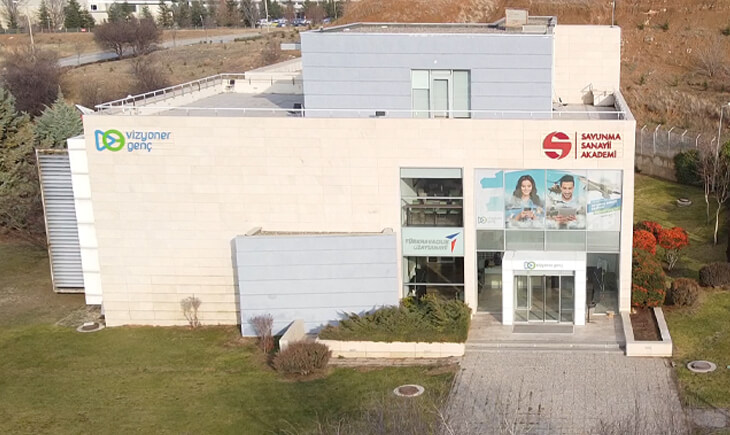
Office Building

Savunma Sanayii Akademi

Address

Üniversiteler Mahallesi ODTÜ TEKNOKENT, 06800, Çankaya/Ankara/Türkiye

Phone

+90 312 424 19 62

Email

akademi@ssb.gov.tr